
Roulette: first dozen and number 12 cover different outcomes
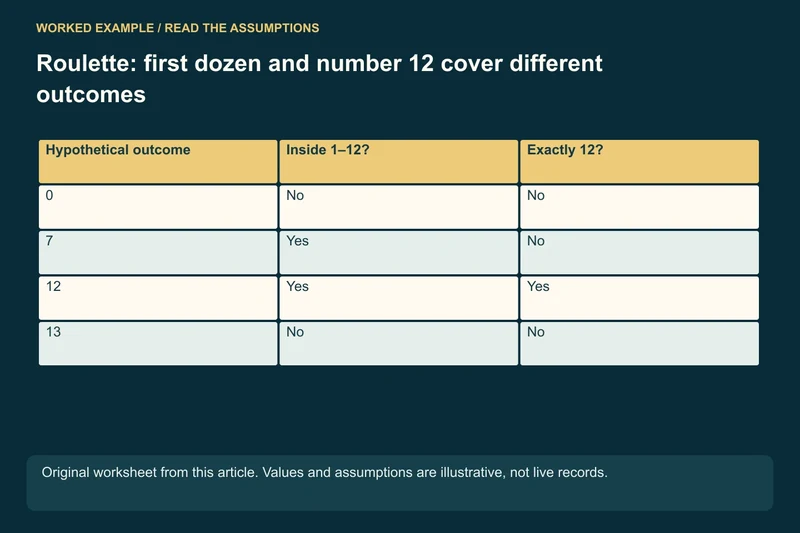
The first dozen and a straight-up selection on 12 are not the same roulette bet. The dozen covers the numbers 1 through 12. The straight-up selection covers only 12. A result of 7 can satisfy the first condition while failing the second.
The label “12” is doing different work in each case: it can mark the end of a range or identify one numbered pocket.

Read the selected area, not only the nearest numeral
The PlayNow roulette instructions distinguish inside selections on specific numbers from outside groups, and exclude zero from the listed dozen groups. That source is a rule example for its product, not a claim about a local table.
For the coverage exercise below, assume a conventional first dozen of 1–12 and one straight-up selection on 12. No other chips or side bets are included.
Test four possible outcomes
| Hypothetical outcome | Inside 1–12? | Exactly 12? |
|---|---|---|
| 0 | No | No |
| 7 | Yes | No |
| 12 | Yes | Yes |
| 13 | No | No |
At outcome 12, both conditions are true. That does not mean one accepted dozen selection has turned into two separate wagers. Two payments would require two confirmed wagers and the applicable rules. The outcome alone cannot create the missing stake.
The neighbouring dozens do not overlap
Under this conventional layout, the second dozen is 13–24 and the third is 25–36. Twelve ends the first group; thirteen begins the second. Twenty-four ends the second; twenty-five begins the third. Zero belongs to none of them.
A quick check is to write the lower and upper endpoints in a note instead of copying only “1st” or “12.” This is especially useful when a cropped image hides the location of the chip or a display highlights covered numbers during a hover. A highlight need not be an accepted wager.
Keep coverage, price and payment separate
This exercise identifies which result satisfies a selection. It does not establish the odds, stake or payout. A wider set of covered pockets does not imply a larger award on success; the paytable defines the payment for each selection type.
For an actual history, preserve the accepted bet label, amount and final result, then read the corresponding payout row. If the record says only “12,” keep the selection type unresolved until the layout or transaction identifies it. A correct range check is useful, but it cannot replace missing account evidence.
The casino plus homepage brings together the site’s other reading topics.
Source-based editorial research and original examples. Sources checked 9 October 2026. No real-money play or account transaction was performed for this article.